
Power and Durability Under Heavy Use
Diesel Repair in Bossier City for power loss under load and fuel delivery inconsistencies
When diesel engines lose power during acceleration or struggle to maintain speed while towing, the issue typically traces to fuel system restrictions, turbocharger inefficiencies, or exhaust backpressure that prevents proper cylinder scavenging. Redemption Automotive diagnoses and repairs diesel engines and related systems in Bossier City for work trucks and heavy-use vehicles where performance degradation affects job-site productivity or daily hauling capacity. Diesel engines operate with precise fuel injection timing and combustion chamber pressures far exceeding gasoline engines, meaning small deviations in fuel quality, air intake restrictions, or exhaust flow create noticeable performance losses that worsen progressively rather than appearing suddenly.
This service addresses diesel-specific concerns including high-pressure fuel pump wear, diesel particulate filter loading, turbocharger vane sticking, and emissions system faults that trigger limp mode or derate conditions. The diagnostic process measures actual fuel pressure against specified values, evaluates turbocharger boost response across RPM ranges, and monitors exhaust gas temperatures to determine whether combustion efficiency has degraded.
Request a diesel performance evaluation to identify whether power loss stems from fuel delivery, airflow restriction, or exhaust system backpressure.
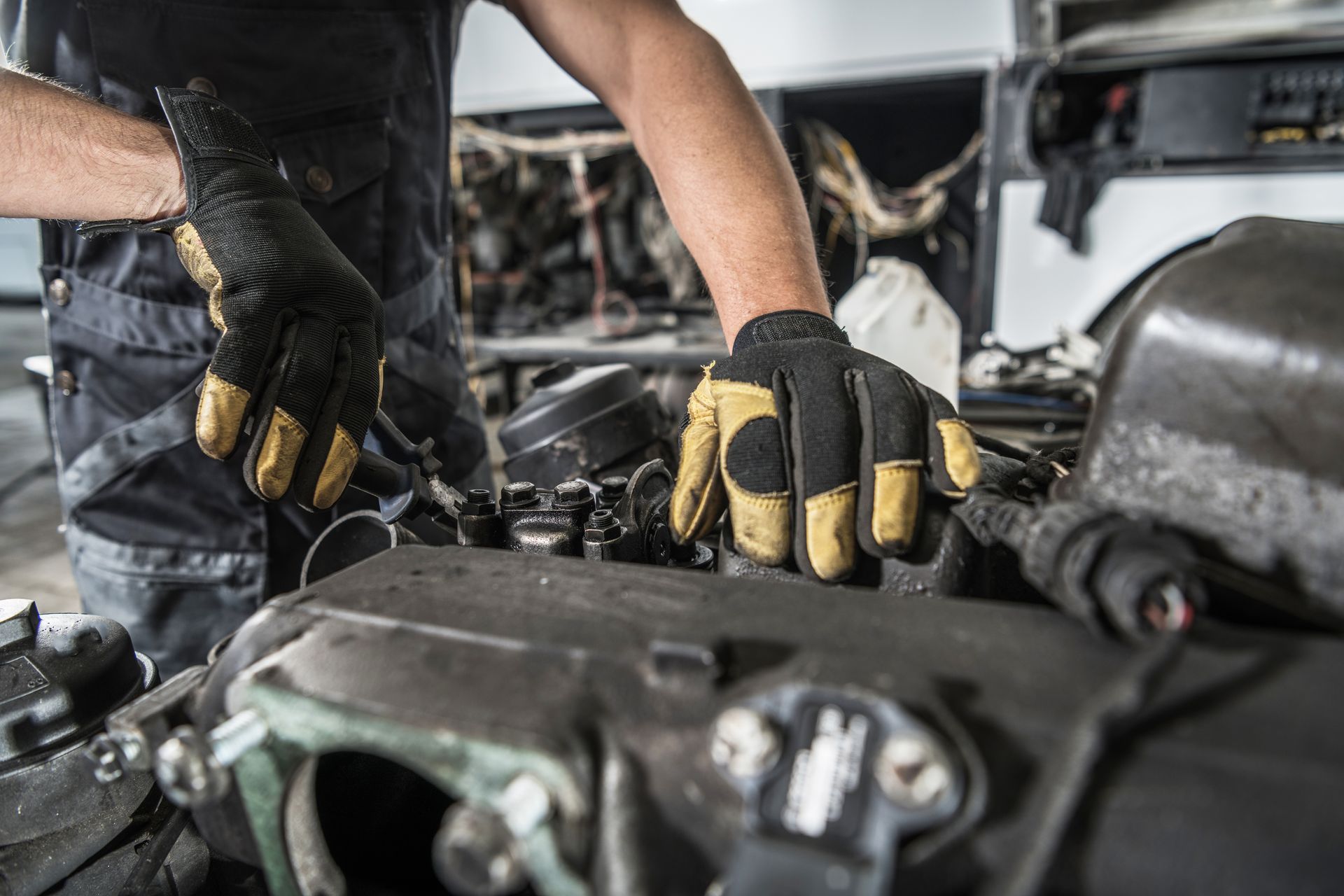
What Diesel Engines Need Long-Term
Diesel repair work focuses on maintaining fuel system cleanliness and combustion efficiency because diesel fuel acts as both a combustant and a lubricant within high-pressure injection systems, meaning fuel quality directly affects component longevity. Contaminated fuel or water intrusion accelerates injector wear and can score fuel pump components, while neglected air filter service allows particulate into turbocharger compressor wheels where it erodes blade edges and reduces boost efficiency over thousands of hours of operation.
After diesel repairs are completed, you will notice restored throttle response when accelerating from a stop, consistent power delivery when climbing grades under load, and elimination of black smoke during hard acceleration that indicated incomplete combustion. Properly functioning diesel engines also return to expected fuel economy figures because injection timing and boost pressure are restored to specifications that ensure complete fuel burn within the combustion chamber.
Diesel engines benefit from regular fuel filter replacement intervals shorter than manufacturer minimums in regions where fuel quality varies, and from periodic diesel particulate filter service that prevents ash accumulation from forcing extended regeneration cycles that reduce fuel economy and increase engine wear during high-temperature cleaning attempts.
Common Questions About Diesel Service
Diesel engines have service requirements and failure patterns distinct from gasoline engines, and understanding those differences helps owners recognize when performance changes indicate developing problems rather than normal operation.
What causes diesel engines to lose power gradually?
Fuel system restrictions from contaminated filters or failing lift pumps reduce injection pressure below the threshold needed for complete combustion, while carbon buildup in intake systems or turbocharger vanes restricts airflow and prevents the engine from reaching specified boost levels under load.
How does Bossier City humidity affect diesel fuel systems?
Moisture condenses inside diesel fuel tanks more readily in humid climates, and water droplets pass through fuel filters where they accelerate corrosion in high-pressure injection components and promote microbial growth that clogs filters and creates organic acids that degrade seals.
Why do diesel emissions systems require specific service?
Diesel particulate filters trap soot that must be burned off during regeneration cycles, and when those cycles are interrupted or ineffective due to short-trip driving patterns, the filter becomes overloaded and triggers fault codes that limit engine power to prevent component damage.
What tools are needed for diesel diagnostics?
Diesel diagnostics require scan tools that monitor fuel rail pressure in real-time, track turbocharger wastegate position, and display exhaust gas temperatures during regeneration events, data that reveals whether systems are operating within acceptable ranges or have degraded beyond safe parameters.
When should diesel fuel filters be replaced?
Diesel fuel filters trap particulate and water continuously, and replacement intervals should occur before restriction reaches levels that activate low-pressure warning systems, typically every 10,000 to 15,000 miles depending on fuel quality and operating conditions in your area.
Redemption Automotive services commercial and personal diesel vehicles throughout their operational lifespan. Schedule an inspection if you are noticing power loss, increased fuel consumption, or emissions system warnings that affect vehicle performance.
